
2026 Co-Convenors
We are pleased to announce the 2026 Co-Convenors! Our inaugural conference will be guided by an esteemed group of Indigenous scholars and leaders whose collective contributions to Indian Country have shaped the field of Indigenous leadership studies. Their decades of service and scholarship provide a foundation for continued dialogue, critical analysis, and intellectual advancement in the study of Indigenous leadership.
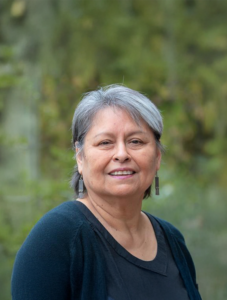
Mary Jo Tippeconnic Fox
Comanche
University of Arizona
Mary Jo Tippeconnic Fox, PhD is an enrolled citizen of the Comanche Nation of Oklahoma, Research Professor of American Indian Studies, and an affiliated faculty in Gender and Women Studies at the University of Arizona (UA), Tucson, Arizona. At the UA, she is the former Head of American Indian Studies, Associate Director of American Indian Studies, Vice-President for Minority Student Affairs, and Associate to the President for American Indian Affairs. Dr. Fox’s scholarly activities focus on historical and contemporary American Indian women’s issues, American Indian education, American Indian higher education, and American Indian studies. Recent publications are two co-edited books, American Indian Studies, Native PhD Graduates Gift Their Stores (2022), and On Indian Ground, The Southwest (2021). She has extensive experience working with American Indian people, communities, and professional organizations.

Cynthia Lindquist
Ta'sunka Wicahpi Winyan (Star Horse Woman)
Spirit Lake Dakota
Chief Strategy Officer, American Indian College Fund
Dr. Cynthia Lindquist or Ta’sunka Wicahpi Winyan (Star Horse Woman) is a member of the Spirit Lake Dakota Tribe, Fort Totten, North Dakota who holds a doctorate degree in Educational Leadership from the University of North Dakota and a Master’s degree in Public Administration from the University of South Dakota.
In serving as President of her Tribe’s college, Cankdeska Cikana Community College (CCCC) for 21 years (2003-2024), the College’s physical campus quadrupled, had 20 years of audits with no findings; and student enrollment, persistence, and completion rates more than doubled. Dr Lindquist also oversaw the transition of managing the Tribe’s Head Start and Early Head Programs to CCCC, including the development of a centralized center with the capability of serving up to 200 children.
She recently served as the Director of Tribal Initiatives & Collaborations at the University of North Dakota (Dec 2024-Feb 2026) and led the drafting of a Tribal Consultation Policy that will be implemented in the spring 2026. Dr Lindquist joined the American Indian College Fund on March 1, 2026 as the Chief Strategy Officer and will be relocating to Denver, CO by June 2026.
Among her leadership roles Dr Lindquist is a founding member of the National Indian Women’s Health Resource Center and is a Bush Foundation Leadership Fellow. She currently serves as Chair of the North Dakota Ethics Commission and is a member of the Bush Foundation Board of Directors.
She previously served on the U.S. National Science Foundation (NSF) Committee on Equal Opportunity in Science and Engineering (CEOSE); the Council of Public Representatives for the National Institutes of Health; the American Indian College Fund; and the American Indian Higher Education Consortium.

John W. Tippeconnic III
Comanche
Professor Emeritus, Arizona State University
John W. Tippeconnic III, a member of the Comanche Nation and part Cherokee, is currently teaching courses in American Indian Studies at California State University San Marcos. He is also an Emeritus Professor and Former Director of American Indian Studies at Arizona State University. Previously, he was a professor of Educational Leadership and Policy Studies at Penn State University where he held the Batschelet Chair in Education Administration. He also directed the Penn State American Indian Leadership Program. He is the former Director of education for the Bureau of Indian Affairs and Director of Indian Education for the U.S. Department of Education. He served as vice president of Navajo Community College (now Dinè College) and was a founding member of the governing board of Comanche Nation College. Early in his career he taught 4th grade and middle school math and social studies and was the Director of the Center for Indian Education at ASU.
He served two terms as president of the National Indian Education Association and received their Indian Educator of the Year and Lifetime Achievement Awards. He was named a “Fellow” by the American Educational Research Association and chaired their Indian Education Special Interest Group. The Comanche Nation also recognized him for his work in education.
His publications include the co-edited books, On Indian Ground: The Southwest published by Information Age Publishing, Inc., Voices of Resistance and Renewal published by the University of Oklahoma Press and Next Steps: Research and Practice to Advance Indian Education. Other selected publications are Leadership and Indian Education: A Dozen Observations, a chapter in the book American Indian Stories of Success and the study The Dropout/Graduation Crisis among American Indian and Alaska Native Students. He served on the editorial boards of the Journal of Educationand the Journal of Diversity in Higher Education. He currently is on the editorial board of the Journal of American Indian Education and is an Indigenous Education Series Editor for the University of Nebraska Press.
His research interests are policy, diversity, leadership, and American Indian education.

Linda Sue Warner
Comanche
President, San Carlos Apache College
Linda Sue Warner, Ph.D. (Comanche Tribe of Oklahoma), is an Indigenous scholar, educator, and higher-education executive whose career spans Tribal colleges and universities, federal agencies, public systems of higher education, and community-based organizations. She currently serves as President of San Carlos Apache College (San Carlos, Arizona), where she leads institutional growth, operational stability, fundraising and external relations, student success, and accreditation efforts. Since August 2024, she has advanced culturally grounded governance by integrating the ARROW framework—Accountability, Respect, Resilience, Openness, and Wisdom—into college operations in preparation for full accreditation and by initiating processes for World Indigenous Nations Higher Education Consortium (WINHEC) accreditation.
Dr. Warner earned her Ph.D. in General Administration (Personnel) from the University of Oklahoma, an M.Ed. in Education Administration from The Pennsylvania State University, a B.A. in Language Arts/Education from Northeastern State University, and an A.A. in Liberal Arts from Northeastern A & M Junior College. Her experience includes teaching and administrative responsibilities at the elementary, secondary, post-secondary, and graduate level.
In higher education, Dr. Warner has held prominent administrative and academic positions, including President of Haskell Indian Nations University, Associate Vice Chancellor for Academic Affairs for the Tennessee Board of Regents, Program Director at the National Science Foundation, Chief Executive Officer of the Indian Community School of Milwaukee, Special Assistant to the President on Tribal Affairs at Northeastern Oklahoma A & M College.
Dr. Warner has served other roles throughout her career, including leading Small Town Route 66 Consulting as the Senior Research Analyst and serving as Project Director for the Pala Tribe of Mission Indians’ “Grow Our Own” professional development initiative. She also was a Clinical Fellow at Meharry Medical College where she facilitated tribal engagement in rural health policy priorities including opioid prevention, behavioral health and suicide prevention, and diabetes prevention.
A widely published scholar and editor, Dr. Warner’s work advances Indigenous knowledge systems, leadership, education policy, and culturally grounded research methods. She is a series editor (with Joely Proudfit) of On Indian Ground: A Return to Indigenous Knowledge—Generating Hope, Leadership and Sovereignty through Education (Information Age Publishing), and editor of Education in The Comanche Nation: Relationships, Responsibility, Redistribution and Reciprocity (Routledge). Her scholarship includes encyclopedia entries, peer-reviewed articles, book chapters, technical reports, and media and book reviews, alongside national and international presentations on Indigenous leadership, education reform, evaluation, film and representation, and Native ways of knowing.
Dr. Warner’s contributions have been recognized through numerous honors, including alumna awards from the University of Oklahoma’s Career Achievement Award, Northeastern A & M’s Distinguished Leader Award, the AARP Oklahoma Indian Elder Award, and national service appointments such as the National Advisory Council on American Indian Education. She has served on multiple editorial and professional boards and remains active in professional associations that support Indigenous education, leadership, research, and community-centered policy development.